SEO Impact of Content and Backlinks
How much impact will 10 blogs/mo + 3 DA20-60 backlinks/mo have on our site traffic?
This is a classic "it depends" question in SEO, but "it depends" isn't helpful. To give you a realistic forecast, we have to model this out based on typical industry benchmarks.
The short answer: This is a mid-volume, compounding strategy. You are building a snowball. For the first 3–4 months, you will likely see almost zero impact. By month 12, this specific cadence (120 articles + 36 quality links) typically yields between 1,000 and 5,000 additional monthly organic visitors for a newish site, or 5,000–15,000+ for an established domain with existing authority.
Here is the detailed breakdown of how that impact accumulates.
1. The "Snowball" Timeline
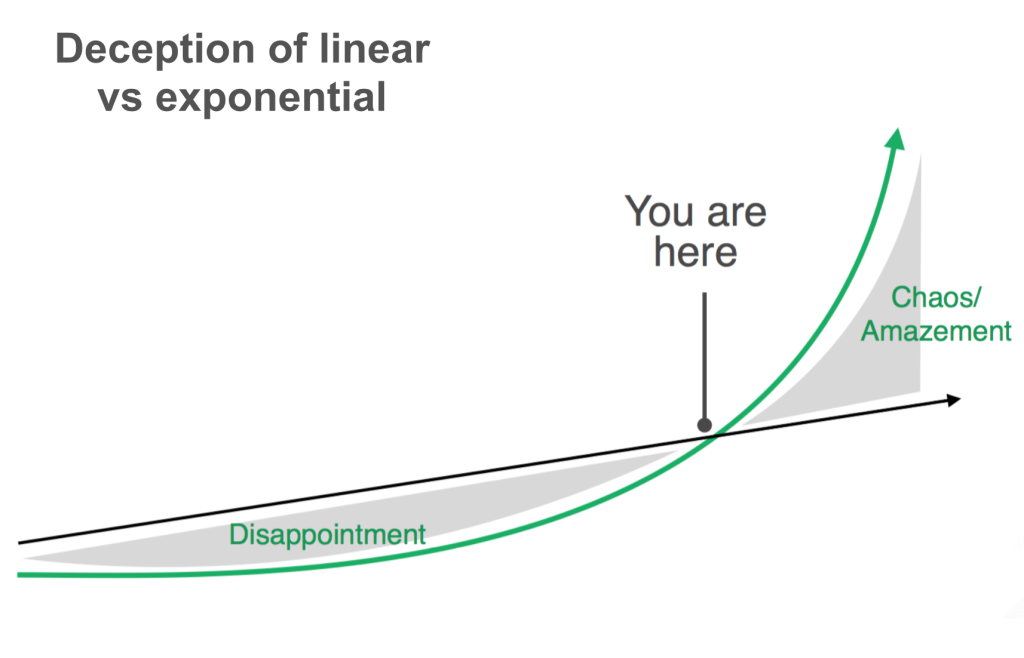
SEO is not linear; it is exponential. 10 blogs in Month 1 do not get traffic in Month 1. They usually mature in Month 6.
| Timeline | Activity Accumulation | Expected Traffic Impact | The "Phase" |
|---|---|---|---|
| Months 1-3 | 30 Blogs / 9 Links | Negligible. Google is testing your content (indexing). | The "Sandbox" Phase |
| Months 4-6 | 60 Blogs / 18 Links | Standard Growth. Impressions rise, but clicks are low. You might see 100–500 visits/mo. | The "Trust" Phase |
| Months 7-9 | 90 Blogs / 27 Links | Acceleration. Early posts hit maturity. DA starts rising. 1k–3k visits/mo. | The "Traction" Phase |
| Month 12+ | 120 Blogs / 36 Links | Compounding. You now have a content library. 3k–10k+ visits/mo. | The "Authority" Phase |
2. Analyzing Your Inputs
The Content: 10 Blogs / Month
The Volume: 120 posts a year is a strong cadence. It signals to Google that you are an active publisher.1
The Math: If you target "Long Tail" keywords (low competition), a successful blog post might average 50–100 visits/month once mature.
Conservative math: 120 posts $\times$ 30 visits = 3,600 monthly visits.
Optimistic math: 120 posts $\times$ 150 visits = 18,000 monthly visits.
The Backlinks: 3 Links / Month (DA 20-60)
The Quality: DA 20–60 is a "safe" mid-range. These aren't Forbes features (DA 90+), but they also aren't spam.
The Function: 3 links a month is not enough to rank for "highly competitive" terms (e.g., "best credit card"). However, it is perfect for validating the 10 blog posts you write. These links act as the "fuel" that allows your content to rank for long-tail keywords.
3. The 3 Factors That Will Break Your Model
Your results will vary drastically based on these three variables:
1. Keyword Selection (The most critical factor)
If you write 10 blogs/mo about "What is Marketing" (High competition), you will get 0 traffic because 3 backlinks/mo cannot compete with HubSpot.
If you write 10 blogs/mo about "Best marketing strategies for dental offices in Northern Virginia" (Low competition), you will dominate that niche quickly.
2. Your Site's Starting "Age"
New Site (<1 year old): Google trusts you less. Expect the lower end of the projections (1k–2k visits by year end).
Established Site (3+ years old): You likely already have some "trust." This content will rank faster. Expect the higher end (5k–10k+ visits).
3. Link "Velocity" vs. Competitors
If your competitors are building 50 links a month, your 3 links will result in slow catch-up. If they are building 0, your 3 links will make you a market leader.
Summary Estimate
If you execute this for 12 months consistently, targeting low-to-medium difficulty keywords:
Total Content: 120 Articles
Total Backlinks: 36 RDs (Referring Domains)
Predicted Traffic Run Rate (Month 12): 3,500 – 6,000 Organic Visits / Month.
Predicted Lead Gen: At a standard 1% conversion rate, this equals 35–60 new leads/month.
Would you like us to help you brainstorm blog topics that would fit this strategy? Get started with Scale Selling today:
What if we did 10 blogs & 20 backlinks?
This changes the dynamic significantly. You are moving from a "Content-Led" strategy to an "Authority-Led" strategy.
Tripling or quadrupling your link velocity while keeping content steady doesn't just add more traffic; it changes what kindof traffic you can target.
Here is how the forecast shifts with 10 Blogs + 20 Backlinks per month:
1. The New "Aggressive" Forecast
With 20 links a month (assuming they remain high quality, DA 20–60), you are building authority much faster than the average site.
| Metric | Previous Model (3 Links/mo) |
New Model (20 Links/mo) |
The Impact |
|---|---|---|---|
| Total Links (Year 1) |
36 | 240 | Massive authority signal difference. |
| Traffic (Month 12) |
3k – 6k visits | 8k – 25k+ visits | You can rank for harder keywords. |
| Maturity Time | 6–9 Months | 3–5 Months | Links force Google to index and rank faster. |
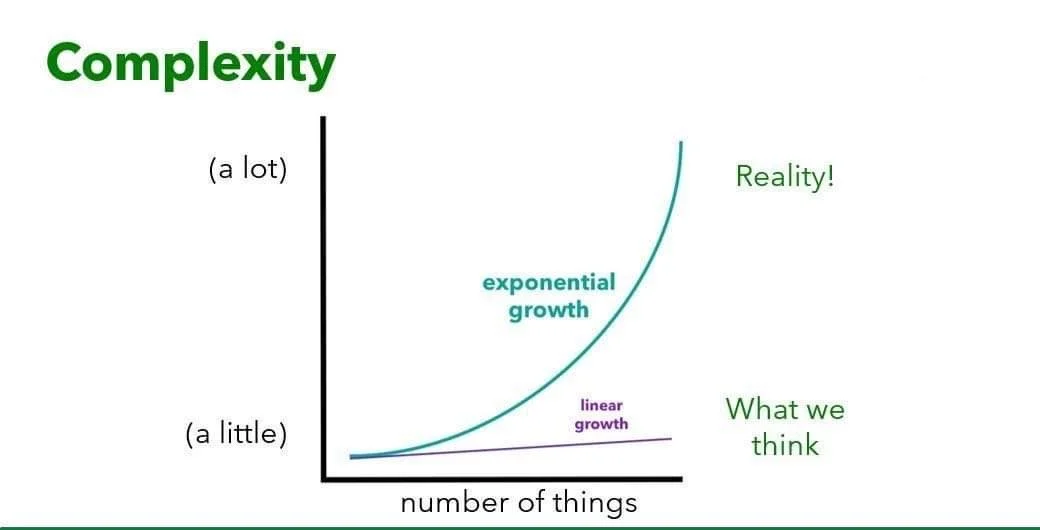
2. Why the Jump is Exponential, Not Linear
You might think 7x more links = 7x more traffic. It’s actually more about access.
Scenario A (3 links): You are restricted to "Low Difficulty" keywords. (e.g., "how to fix a leaky faucet handle 2024").
Scenario B (20 links): You now have the "budget" to compete for "Medium/High Difficulty" keywords (e.g., "best plumber in [City]" or "plumbing repair cost").
The "High Difficulty" keywords usually have 10x–50x the search volume. By building 240 links in a year, you unlock access to keywords that have 5,000 searches/month instead of just 50 searches/month.
3. The Risk: "The Ratio Problem"
There is a specific danger in this new model.
If you build 20 links a month to a site that only has 10 new pages, you risk looking unnatural if you aren't careful with link distribution.
Don't: Point all 20 links to your Home Page or Service Pages. That looks like spam/manipulation (Penguin penalty risk).
Do: Distribute them.
5 links to the Home Page (Brand authority).
10 links to specific, high-value blog posts (to boost specific rankings).
5 links to "Power Pages" or Service Pages.
4. Strategic Recommendation
If you have the budget for 20 links/mo, you should consider changing your content strategy to match it.
Writing 10 standard 800-word blog posts is a waste of those 20 links. With that much link juice, you should write fewer, better pages (or upgrade the 10).
The "Skyscraper" Approach: Instead of 10 generic tips, write "The Ultimate Guide to [Topic]" (3,000 words).
Then, point 10 of your monthly links to that single guide.
That guide will likely hit Page 1 for a major industry term.
Summary
Traffic Potential: Significantly higher (8k–25k+ monthly visits by Year 1).
Speed: Faster ranking (3–5 month lag instead of 6–9).
The Trap: Ensure the links are not all low-quality spam. 20 bad links are worse than 3 good ones. If these are legitimate outreach links, this is a very aggressive growth strategy.
Would you like us to analyze one of your top competitors to see how many backlinks they are building per month? (This will tell us if 20 is overkill or necessary). Book your FREE strategy session + audit here:
What about 4 blogs and 3 backlinks per month?
This cadence shifts you into a "Strategic Maintenance" or "Sniper" mode.
While 10 blogs/mo is a "Growth" strategy, 4 blogs/mo is often the minimum required to tell Google, "We are still alive and active." However, because you are keeping the backlink volume at 3/mo, this strategy has a hidden "Efficiency Superpower."
Here is the forecast for 4 Blogs + 3 Backlinks per month:
1. The "Efficiency" Ratio
In your previous model (10 blogs / 3 links), you only had enough "link juice" to support 30% of your new content. The other 7 posts were left to fend for themselves.
In this model (4 blogs / 3 links), you have a 75% Coverage Ratio.
Almost every single piece of content you write gets a backlink.
This is a "Sniper" strategy. You are taking fewer shots, but you are guaranteeing that every shot has the ammo to rank.
2. The Traffic Forecast: "Slow & Steady"
Because you are publishing 66% less content, your "surface area" for catching traffic is much smaller. You won't see viral spikes, but you will see very stable, defensible rankings.
| Timeline | Activity Accumulation | Expected Traffic Impact | The "Phase" |
|---|---|---|---|
| Months 1-6 | 24 Blogs / 18 Links | Minimal. You simply don't have enough pages indexed yet to generate volume. | The "Foundation" Phase |
| Months 7-12 | 48 Blogs / 36 Links | Steady Trickle. 300 – 1,000 visits/mo. | The "Validation" Phase |
| Year 2+ | 90+ Blogs / 70+ Links | Reliable Growth. 1,500 – 3,000 visits/mo. | The "Asset" Phase |
3. The "Sniper" Requirement
With only 4 posts a month, you cannot afford to miss.
In the 10-blog model: You can write a few "fluff" posts or news updates, and it's fine.
In the 4-blog model: Every single post must be a calculated, high-intent keyword. If you write about "Company News" or "Our Picnic," you have wasted 25% of your monthly marketing budget.
This strategy works best if:
You are in a "boring" B2B niche (e.g., "Industrial HVAC Repair") where there aren't 100 things to talk about anyway.
You have a limited budget but want high ROI per page.
| Strategy | Cadence | Predicted Year 1 Traffic |
Best For... |
|---|---|---|---|
| The "Snowball" | 10 Blogs / 3 Links | 3.5k – 6k | Standard growth; capturing wide market share. |
| The "Authority" | 10 Blogs / 20 Links | 8k – 25k+ | Aggressive domination; high-competition niches. |
| The "Sniper" | 4 Blogs / 3 Links | 500 – 1.5k | Budget efficiency; highly specific B2B niches. |
Recommendation: If you choose this 4-blog route, I strongly suggest you increase the length of the posts. Since you are writing fewer of them, make them "Power Pages" (1,000+ words) rather than short updates, use proper page formatting and strategic internal/external links.
Not sure if you need a "Sniper" or a "Snowball" strategy?
Every industry is different. 3 backlinks might be enough to dominate local plumbing, but you might need 20 to compete in SaaS.
Stop guessing. Book a 30-Minute Strategy Call with us. We will look at your competitors, analyze your current authority, and tell you exactly which growth model fits your budget and goals.
Build My Custom Forecast